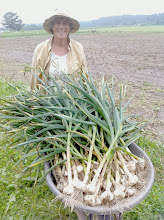
Rob Hopkins, who started the Transition Town Movement, says, "It is possible that life with less energy will be better." I like that idea, its hopeful. Hope is a word that has gotten a lot of use recently and that's a good thing. Looking towards a life with less energy, I want to have hope. One of the places that I have found hope is in this little animated film by Frederic Back called "Crac!". Its a French Canadian film that celebrates their traditions but also the community of people who lived with less energy. Enjoy.
Wednesday, January 28, 2009

Tuesday, January 6, 2009
Sustainability, Energy Descent and Localization
Every now and then, new information hits me that changes my whole outlook on life. This happened in November when I was introduced to the website chrismartenson.com/crashcourse. This is a fascinating, scary and eye opening discussion of the intersection of the Environment, the Economy and Energy.
I have known that something "big" is going on but it was amorphous until I watched Chris Martenson's 3 hour Crash Course. It made so much sense and was quite sobering. What we do with information like this makes all the difference. Talking with my friend Dana, I discovered the Transition Town (TT) Movement and my energy was able to move towards the positive. The TT movements outlines a framework in which communities can look at how to prepare for a life with less cheap resources. It involves becoming closer to others, more resourceful and resilient. Rob Hopkins who started TT, has the great attitude about the upcoming reduction in available resources, "Maybe life will be better without all those energy inputs!"
As a farmer, I can work my horses more, work my self more, slower and with purpose, not to free up more time but to enjoy the time more; invite more people to live at my farm, share my life and the resources that are here. How can I grow more to have extra to feed those in need. Can I sell more shares and hire one more worker to support another person locally?
Here is an example of a video developed by TT Lewes in England.
I have known that something "big" is going on but it was amorphous until I watched Chris Martenson's 3 hour Crash Course. It made so much sense and was quite sobering. What we do with information like this makes all the difference. Talking with my friend Dana, I discovered the Transition Town (TT) Movement and my energy was able to move towards the positive. The TT movements outlines a framework in which communities can look at how to prepare for a life with less cheap resources. It involves becoming closer to others, more resourceful and resilient. Rob Hopkins who started TT, has the great attitude about the upcoming reduction in available resources, "Maybe life will be better without all those energy inputs!"
As a farmer, I can work my horses more, work my self more, slower and with purpose, not to free up more time but to enjoy the time more; invite more people to live at my farm, share my life and the resources that are here. How can I grow more to have extra to feed those in need. Can I sell more shares and hire one more worker to support another person locally?
Here is an example of a video developed by TT Lewes in England.
Monday, July 28, 2008
My Partners


My partners have four legs and are fuzzy in the winter. They are my fjord horses. Tora, Alf and Freya have been with me on the farm for a long time. I have had Tora for 16 years and she is 21 years old. Always my steady friend, I don't know what I would do without her. Her son Alf is 15 years old. Right now he is retired from work because of a shoulder injury. Freya is Alf's daughter and Tora's granddaughter and she is a young 8 years old. Working horses is a wonderful, sometimes frustrating partnership. They do a better job the more you work them especially if its regular work. I use the horses to cultivate the fields and on the grain drill. I thank these wonderful old friends for all the work and patience. Pictures by my neighbor and farm helper, Macey Bundt.

Sunday, June 29, 2008
Kate's Folly
 Here is an update on the addition to the house. Last we saw the spruce trees, they were being sawed up for lumber for the addition. After 3 months of drying, Mark returned and we re-sawed them to size. Here is the work on the house so far. The OSB is covering up the window space but I will post pictures when it is further along.
The next step will be to insulate and shingles. The siding will match the house. Trying to figure out how to fit some furniture inside is a fun puzzle.
Wednesday, June 25, 2008
The Great Green Machine

Some people spend money on spas or jewelry; I like to spend money on inventions and experiments. The latest is the green machine to roll down rye. Even appropriate technology has trends and fads and the newest is rye roll down. There are advantages to conventional no-till agriculture. The soil is not disturbed; there is less erosion etc. Much of it depends on using herbicides to kill the existing plant cover. When you grow winter rye and roll it down in the flowering stage, it dies. Jury is out. Much of the university research on this is being done where the spring and summer are longer and the rye matures early enough to then plant crops into the rolled down rye. The rye suppresses the weeds and adds organic matter to the soil. This takes some heavy metal to crimp and kill the rye. The green machine fills with water to add weight to it. Transplanting into the flattened rye is tricky too and I have yet to get my transplanter set up well enough. Spending more money is inevitable. Some of my experiments are successful and some are not. The local welder often shakes his head at the equipment he builds. Is it worth the money? Yes! American farmers have long been the innovators of the country developing all kinds of new technology.
How is the experiment going? In the fall, I planted rye and then when it germinated, I used the small rototiller to make rows without rye. This allowed me to plant the pumpkins and winter squash before the rye was ready to roll down and I could use my regular transplanter. Drip tape was laid as the plants were transplanted in case of dry weather. I rolled the rye and hairy vetch mix. It killed the rye but not the vetch and I will hit it again with the green machine. If the vetch does not die, I will need to mow several times and the plants will be at risk of being smothered by this aggressive plant. Next steps: work with the welder to attach a trash coulter and chisel tooth to the transplanter to allow it to plant right into the rye. I'll keep you posted.
Wednesday, June 4, 2008
Understanding

"Storms may produce large hail and strong winds." Those are the words a farmer hates to read in the forcast. Before meteorologists and forecasts, we didn't know what was coming except by watching the sky, noticing if the flies were biting or whether the underside of the oak leaves were exposed. For the last 3 days, I have been rushing around because it might rain. It hasn't. At 6:00 a.m. I jumped from bed having realized that I could till between the plastic mulch rows before it rained. Its 9:30 at night and it still hasn't rained.
I am not a native of the Midwest. Garrison Keilor on A Prairie Home Companion has made me smile with descriptions of the "don't get too hopeful, things could get worse" part of the Midwest. After the tornado, I suddenly saw the root of this feeling and understood it better. We had just finished moving the hoop houses when one was destroyed in the winds. At least for now, things feel more tenuous. They feel tenuous and I have neighbors close, telephones, forecasts, and a local grocery store full of food. This past week I have been thinking about the early European settlers on the plains who had to survive by their own effort and hard work. I am honored to be among those who work the land.
Tuesday, May 27, 2008
TORNADO!


A tornado crashed through the Prairie Farm area on Sunday, May 25, my birthday in fact. Good reason not to take things personally. The storm broke trees and at the farm, twisted and ruined one of the hoop houses. The hoop house had just been moved to the new location. Members had just planted the new tomatoes in the ground. In no time flat, the hoop house was destroyed. Neighboring farms lost sheds and barns. No one is hurt, the rest is just stuff.
On Tuesday morning 10 neighboring farmers showed up and in only 2 hours the damaged hoop house was removed from the other hoop house and disassembled. A new hoop house has been ordered and order will be restored to the farm. The tomatoes that had been planted have been moved back to the green house and will have to wait about 10 days to get back into their new home.
Subscribe to:
Posts (Atom)